
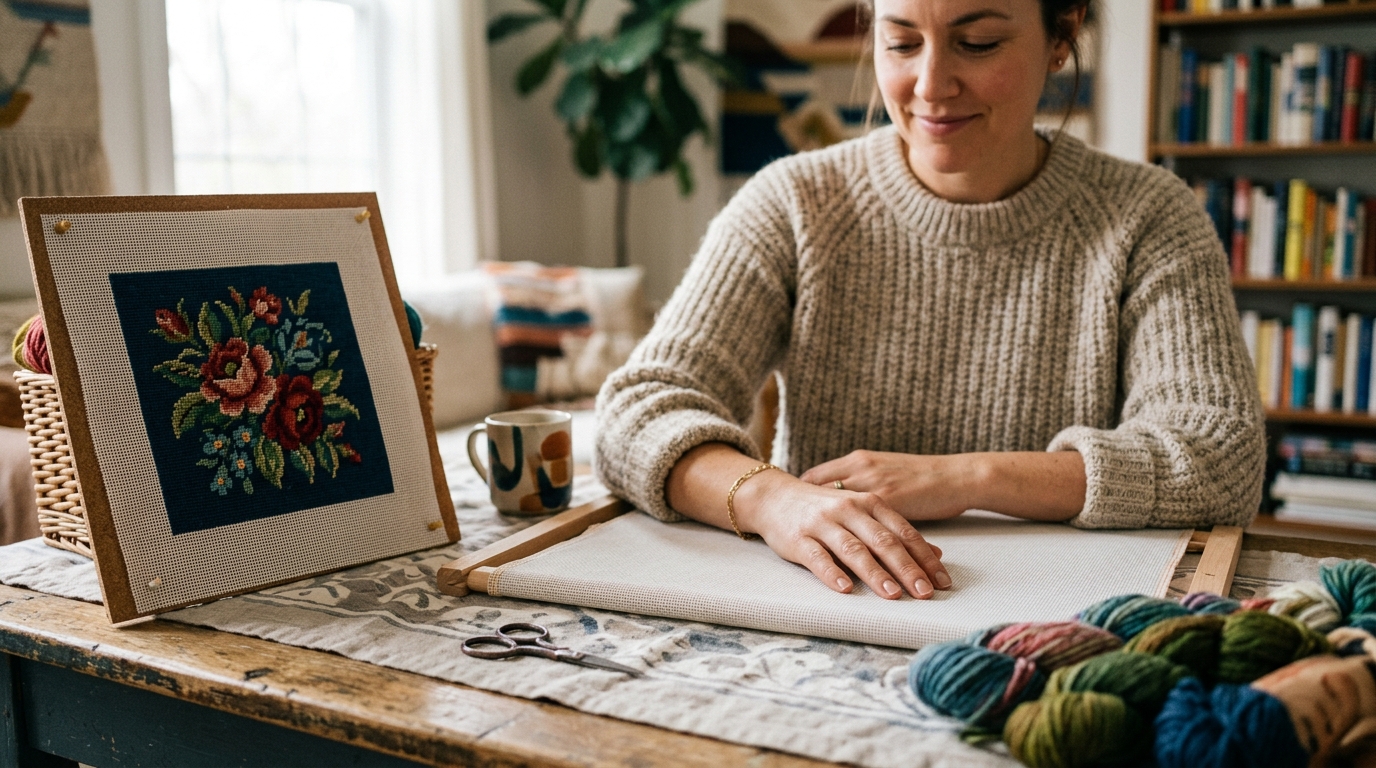
Pre-Stitched vs Non-Pre-Stitched Needlepoint Canvas: What Every Stitcher Should Know
If you are shopping for your next needlepoint project, one of the first choices you will face is whether to buy a pre-stitched or a non-pre-stitched canvas. Each option offers a different creative experience, time commitment, and final result. A pre-stitched canvas (also called a preworked canvas) arrives with a central design already stitched by hand, while a non-pre-stitched canvas gives you full control over every single stitch. Understanding the differences will help you pick the right canvas for your skill level, schedule, and creative goals.
What Is a Pre-Stitched Needlepoint Canvas?
A pre-stitched needlepoint canvas is a canvas on which a central motif has already been embroidered by hand, leaving the background unstitched for you to complete. These canvases gained popularity in the mid-20th century and were commonly produced by brands like Bucilla and Paragon. Historically, preworked canvases were made as early as the 18th century and were often intended for chair seats featuring floral or fruit motifs.
The key advantage is speed. Because the intricate design work is done for you, your job is to select a background color that complements the motif and stitch it in. This lets you personalize a piece to match your decor without spending dozens of hours on the detailed center design.
What Is a Non-Pre-Stitched Needlepoint Canvas?
A non-pre-stitched needlepoint canvas is a canvas that arrives with no stitching completed at all. It may be blank, hand-painted, printed, or charted, but every stitch is yours to place. Hand-painted canvases are individually crafted by artists who paint each design directly onto the mesh, providing a color guide for every stitch. Browse all canvases at The Red Thread Atelier to see the range of hand-painted designs available today.
Non-pre-stitched canvases offer total creative freedom. You choose the stitches, the threads, and the textures throughout the entire piece. Many stitchers find this more rewarding because the finished work is entirely their own.
Side-by-Side Comparison
The table below highlights the practical differences between the two canvas types so you can make an informed decision.
| Feature | Pre-Stitched Canvas | Non-Pre-Stitched Canvas |
|---|---|---|
| Design completion at purchase | Central motif already stitched | No stitching done; design is painted, printed, or blank |
| Time to finish | Shorter (background only) | Longer (entire design + background) |
| Creative control | Limited to background color and stitch | Full control over every element |
| Common canvas type | Penelope (double-thread) | Mono (single-thread) or interlock |
| Typical price range | $30 - $100+ (vintage or new) | $50 - $300+ (hand-painted) |
| Skill level | Beginner-friendly | All levels; hand-painted is beginner-friendly |
| Stitch variety | Usually tent stitch for background | Hundreds of stitch options |
| Personalization | Background color choice | Unlimited thread, stitch, and texture choices |
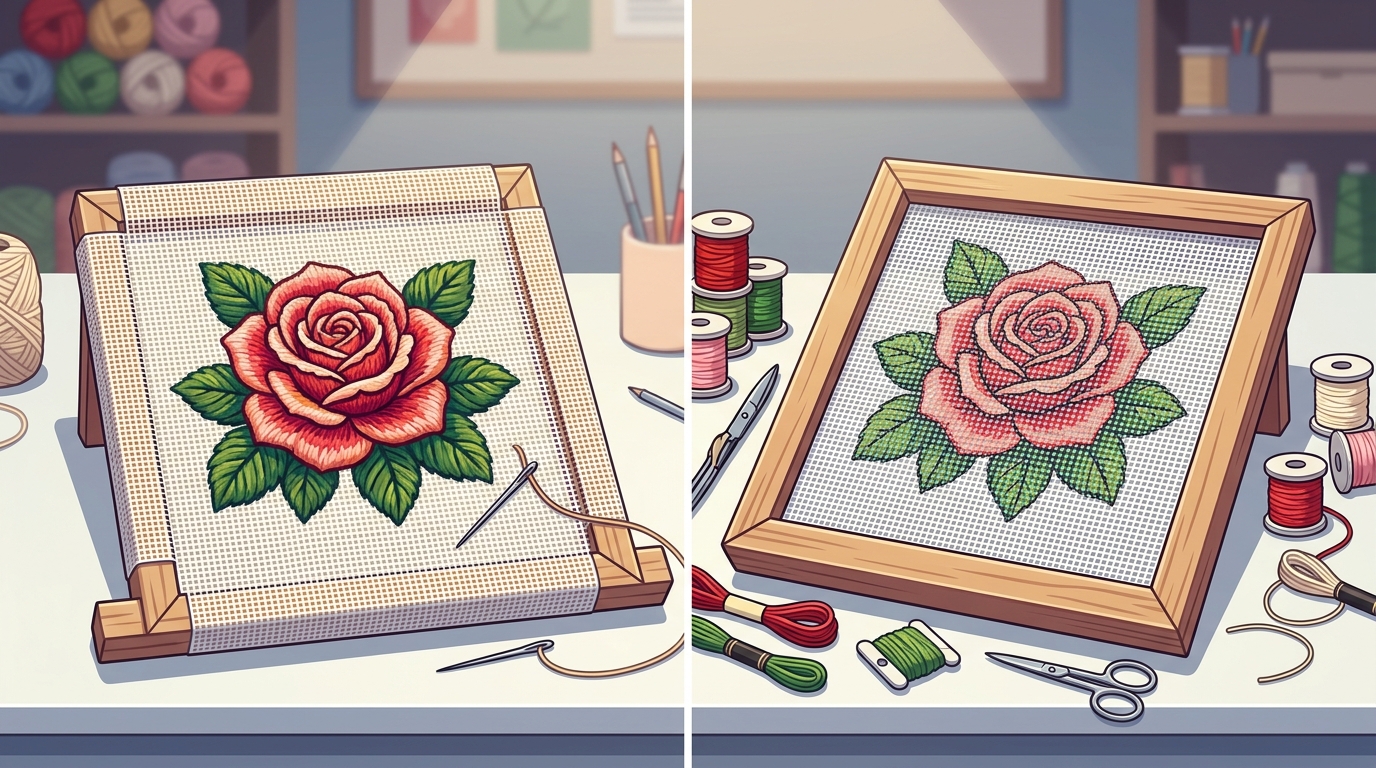
Canvas Types Used for Each
Penelope Canvas and Pre-Stitched Designs
Penelope canvas is a double-thread canvas where both the warp and weft threads are doubled. This construction allows stitchers to work larger stitches over both threads or split them apart for finer detail. Almost all preworked needlepoint designs available today use Penelope canvas because of its strength and versatility.
Mono and Interlock Canvas for Non-Pre-Stitched Projects
Mono canvas is a single-thread construction where each vertical and horizontal thread stands alone. It is the most common type for hand-painted designs and comes in mesh counts ranging from 10 to 24 threads per inch. Needlepoint 101 at The Red Thread Atelier covers the basic stitches you will use on mono canvas, including basketweave and continental.
Mesh Count Matters
Mesh count is the number of threads (or holes) per inch of canvas. A 10-mesh canvas has 10 holes per inch and is suited for quick projects with thicker yarn, while an 18-mesh canvas allows for finer detail. Your mesh count directly affects how detailed your finished piece will look regardless of whether you start pre-stitched or not.
Who Should Choose Which?
If you are new to needlepoint and want a satisfying project without a steep learning curve, a pre-stitched canvas is a smart starting point. You will practice consistent background stitching and learn tension control on a forgiving format. Needlepoint kits from The Red Thread Atelier are another excellent beginner option that include canvas, threads, needle, and a guide.
If you crave full creative expression and enjoy selecting from dozens of stitch types, a non-pre-stitched hand-painted canvas is the way to go. Experienced stitchers often prefer this route because it lets them incorporate techniques like basketweave, Scotch stitch, Hungarian stitch, and Gobelin throughout a single piece.
Finishing Considerations
No matter which canvas type you choose, finishing is the final step that transforms stitched canvas into a pillow, ornament, belt, or wall hanging. Professional finishing is a hand-done process. At The Red Thread Atelier, industry-standard turnaround runs about 3 to 4 months for an ornament and 6 to 9 months for a pillow.
Pre-stitched canvases sometimes require extra blocking because the existing stitches may pull the canvas in one direction. Using stretcher bars during your background stitching can minimize distortion. Non-pre-stitched pieces benefit from the basketweave stitch, which provides better coverage and produces less canvas warping than other stitch types.
Key Takeaways
- A pre-stitched (preworked) canvas comes with a central design already embroidered, leaving you to stitch only the background.
- A non-pre-stitched canvas has no completed stitching and gives you full creative control over the entire design.
- Pre-stitched canvases are typically on Penelope (double-thread) canvas; non-pre-stitched designs usually use mono or interlock canvas.
- Hand-painted canvases are individually crafted by artists, making each one unique and easier to follow than printed charts.
- Mesh count determines detail level: higher counts mean finer stitches and more intricate designs.
- Beginners benefit from either pre-stitched canvases or complete kits that include threads, needle, and instructions.
- Professional finishing transforms your stitched canvas into a functional or decorative piece and requires weeks to months of lead time.
Frequently Asked Questions
What does "pre-stitched" mean in needlepoint?
Pre-stitched (or preworked) means a portion of the needlepoint canvas, usually the central design or motif, has already been stitched by hand before you purchase it. You complete the piece by stitching the remaining background area.
Are pre-stitched canvases good for beginners?
Yes. Because the complex design work is already done, beginners can focus on learning consistent tension and basic stitches like the continental or basketweave without worrying about color changes or intricate patterns.
What is a hand-painted needlepoint canvas?
A hand-painted needlepoint canvas is a non-pre-stitched canvas on which an artist has individually painted a design directly onto the mesh. The painted colors guide your thread selection and stitch placement. These canvases are popular at shops like The Red Thread Atelier.
Can I use any stitch on a pre-stitched canvas?
You can use any stitch for the background, but most stitchers opt for tent stitch (continental or basketweave) to match the texture of the preworked motif. Basketweave is generally preferred because it causes less canvas distortion.
Why are pre-stitched canvases usually on Penelope canvas?
Penelope canvas has doubled warp and weft threads, making it strong enough to hold existing stitches without distortion. It also allows combining larger and smaller stitches (gros point and petit point) on the same piece for added detail.
How much does a hand-painted needlepoint canvas cost?
Hand-painted canvases typically range from $50 to $300 or more, depending on the designer, size, and complexity. Pre-stitched canvases can sometimes be found for less, especially vintage pieces, starting around $30.
Do I need to block a pre-stitched canvas after finishing?
Usually, yes. The existing stitches combined with your background stitching can cause the canvas to warp. Blocking, which involves dampening and pinning the canvas to its original shape, restores it to a true rectangle before finishing.
Where can I find quality needlepoint canvases online?
The Red Thread Atelier offers a curated selection of modern and timeless hand-painted canvases, kits, threads, and accessories. Their self-finish products are also available for stitchers who prefer to finish pieces on their own.
Start Your Next Project
Whether you are drawn to the convenience of a pre-stitched canvas or the creative freedom of a hand-painted design, the right canvas is out there waiting for you. Explore the full canvas collection at The Red Thread Atelier and find your next project today. Have questions? Email hello@theredthreadatelier.com and the team will help you choose.