
How to Select the Perfect Thread for Your Needlepoint Project
Choosing the right thread can make or break a needlepoint project. The fiber you pick determines how your stitches look, how smoothly you work, and how long the finished piece lasts. Whether you are a first-time stitcher browsing beginner-friendly canvases or a seasoned pro hunting for the perfect specialty fiber, understanding your thread options is essential. In this guide we walk through every major thread type, explain how to match thread to canvas mesh, and share practical tips so you can stitch with confidence from the very first pull.
Why Thread Choice Matters
Thread is the paint of needlepoint. The right fiber glides through your canvas, covers evenly, and produces the texture you envision. The wrong thread can leave gaps, fray mid-stitch, or fight you at every pass. Thread choice also affects durability: a pillow that gets daily use needs a tougher fiber than a framed ornament that hangs on a wall once a year.
At The Red Thread Atelier, we curate threads across every major fiber category so you can find exactly the right match for your canvas and skill level.
Major Needlepoint Thread Types
Wool
Wool thread is the traditional favorite for needlepoint. It is a strong, forgiving fiber with natural elasticity that covers canvas easily, making it ideal for beginners. Wool wears well over time, so it is a smart pick for functional items like belts, pillows, and accessories. Popular wool lines include Appleton Tapestry Wool, Planet Earth Wool, and Vineyard Merino Wool. According to World of Needlepoint, needlepoint wool yarn can last for centuries with proper care.
Cotton
Cotton thread is a durable, affordable option with a subtle sheen. Perle cotton is a twisted, non-divisible thread available in weights #3, #5, and #8, while six-strand embroidery floss lets you separate plies to fine-tune thickness. Cotton does not hide uneven tension as easily as wool, but it delivers crisp stitch definition. It is especially popular for geometric patterns and detailed color work.
Silk
Silk thread is the luxury option, prized for its rich luster and smooth feel. Twisted silks like Vineyard Silk and Pepperpot Silk behave similarly to perle cotton, while plied silks such as Splendor and Soie d'Alger require a laying tool for best results. Silk costs more and can be more delicate, so many stitchers reserve it for accent areas or special heirloom pieces.
| Fiber | Finish | Durability | Skill Level | Best For |
|---|---|---|---|---|
| Wool | Matte | High | Beginner | Pillows, belts, large areas |
| Cotton | Slight sheen | High | Beginner-Intermediate | Geometric designs, detail work |
| Silk | High luster | Moderate | Intermediate-Advanced | Accents, heirlooms |
| Wool-Silk Blend | Subtle luster | High | All levels | Versatile, all-purpose |
| Metallic / Novelty | Sparkle / Texture | Low-Moderate | Intermediate | Highlights, small areas |
How to Match Thread to Canvas Mesh
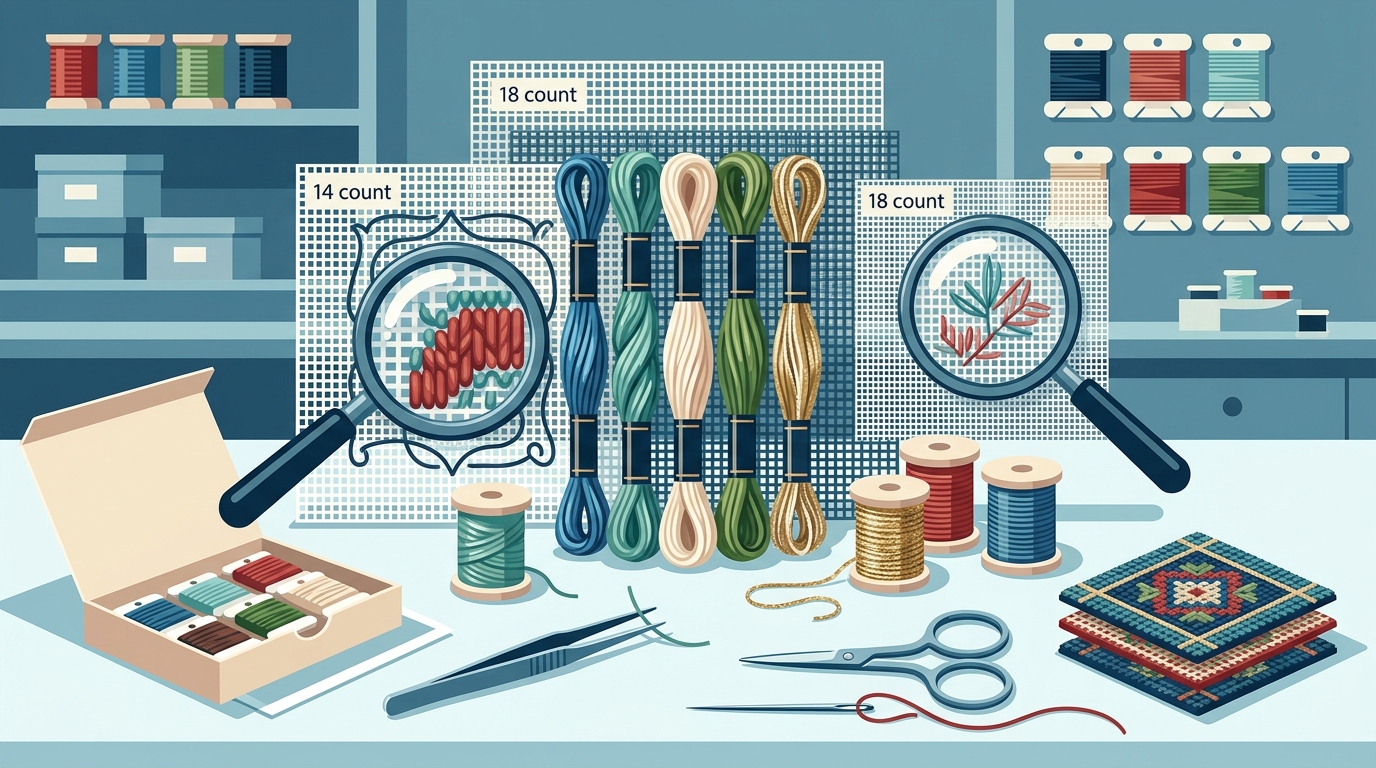
Canvas mesh count is the number of holes per inch on your needlepoint canvas. A simple rule governs thread selection: larger mesh needs thicker thread, while finer mesh needs thinner thread. Getting this pairing right prevents gaps and distortion.
General Mesh-to-Thread Guidelines
- 10-mesh: Full-strand tapestry wool or multiple strands of Persian wool.
- 13-mesh: Silk and Ivory, two to three strands of Persian wool, DMC Perle #3, or Very Velvet.
- 14-mesh: Two to three strands of Persian wool or Perle #5.
- 18-mesh: Single-strand Persian wool, Vineyard Silk, Perle #5, or Petite Very Velvet.
If you are unsure, stitch a small test patch. Flip the canvas over and check the back. You should see complete coverage with threads lying flat and smooth. Browse our full range of needlepoint threads and fibers organized by type to find the ideal weight.
Consider Your Project's Purpose
Before you buy thread, ask yourself how the finished piece will be used. Functional items like belts, bag straps, and couch pillows need durable fibers. Wool and cotton are the best choices for high-use items because they withstand repeated handling. Decorative pieces like ornaments and framed art can showcase delicate silk or metallic threads that would not hold up to daily wear.
If you plan to have your piece professionally finished, factor in the finisher's requirements as well. Our FAQ page covers finishing lead times and what to expect from the process.
Mixing Threads on One Canvas
You can absolutely use multiple thread types on a single canvas. Combining wool backgrounds with silk accents or adding a metallic highlight creates interesting textural contrast that makes a design pop. Many experienced stitchers blend fibers routinely to add dimension.
When mixing threads, keep tension consistent across fiber types. Test each new thread on a scrap area first. And remember that different fibers may require different needle sizes, so adjust as needed.
Specialty and Novelty Threads
Specialty thread is any fiber designed to add unique texture or sparkle beyond what standard wool, cotton, or silk can achieve. Metallic threads like Kreinik and Fyre Werks introduce shimmer. Velvet threads such as Very Velvet add plush dimension. Overdyed threads create multi-tonal color effects with minimal effort.
These fibers are best used in small doses. A touch of sparkle on a holiday ornament or a velvet accent on a floral petal can elevate an entire design. Explore our curated selection of specialty threads to find the right finishing touch.
Key Takeaways
- Thread fiber type directly affects the look, feel, and longevity of your finished needlepoint.
- Wool is the most beginner-friendly thread thanks to its forgiving stretch and excellent coverage.
- Always match thread weight to your canvas mesh count to avoid gaps or distortion.
- Consider how the finished piece will be used before selecting delicate fibers like silk.
- Mixing thread types on one canvas creates rich texture and visual depth.
- Specialty threads work best as accents rather than full-coverage fibers.
- When in doubt, stitch a test patch and check the back for even coverage.
Frequently Asked Questions
What is the best needlepoint thread for beginners?
Wool is widely considered the best thread for beginners. It has natural stretch that covers canvas easily and forgives uneven tension. Cotton perle is another great starter option because it is affordable, sturdy, and available in many colors.
How do I know which thread weight matches my canvas?
Check the mesh count of your canvas. Lower mesh numbers (10-13) need thicker threads, while higher mesh numbers (18+) need thinner threads. Most thread labels indicate compatible mesh sizes, and a quick test patch confirms proper coverage.
Can I mix different thread types on one needlepoint canvas?
Yes. Many stitchers combine wool, silk, cotton, and specialty fibers on the same canvas to create texture and visual interest. Just keep your tension consistent and adjust needle size when switching between fibers.
Is silk thread durable enough for pillows and belts?
Silk is more delicate than wool or cotton. While some silk blends like Silk and Ivory are durable enough for belts, pure silk is better suited for decorative or lightly handled pieces. For high-use items, wool or cotton is recommended.
What are specialty threads in needlepoint?
Specialty threads are fibers designed to add unique effects like sparkle, velvet texture, or color variation. Examples include metallic threads (Kreinik), velvet threads (Very Velvet), and overdyed threads (ThreadworX). They are typically used for accents and highlights.
How much thread do I need for a project?
Thread quantity depends on the canvas size, mesh count, and stitch type. A good practice is to buy slightly more than you think you need to avoid running out mid-project. Pay attention to dye lots for large background areas to ensure color consistency.
Where can I buy quality needlepoint threads online?
The Red Thread Atelier offers a curated collection of needlepoint threads including classic cottons, silks, wools, and specialty fibers. You can shop our full thread collection online or visit our shop in Locust Valley, New York.
Ready to Find Your Perfect Thread?
Browse the full thread collection at The Red Thread Atelier and discover curated fibers for every project style and skill level. Need help choosing? Just leave a note at checkout and our team will select the perfect threads to kit your canvas.