
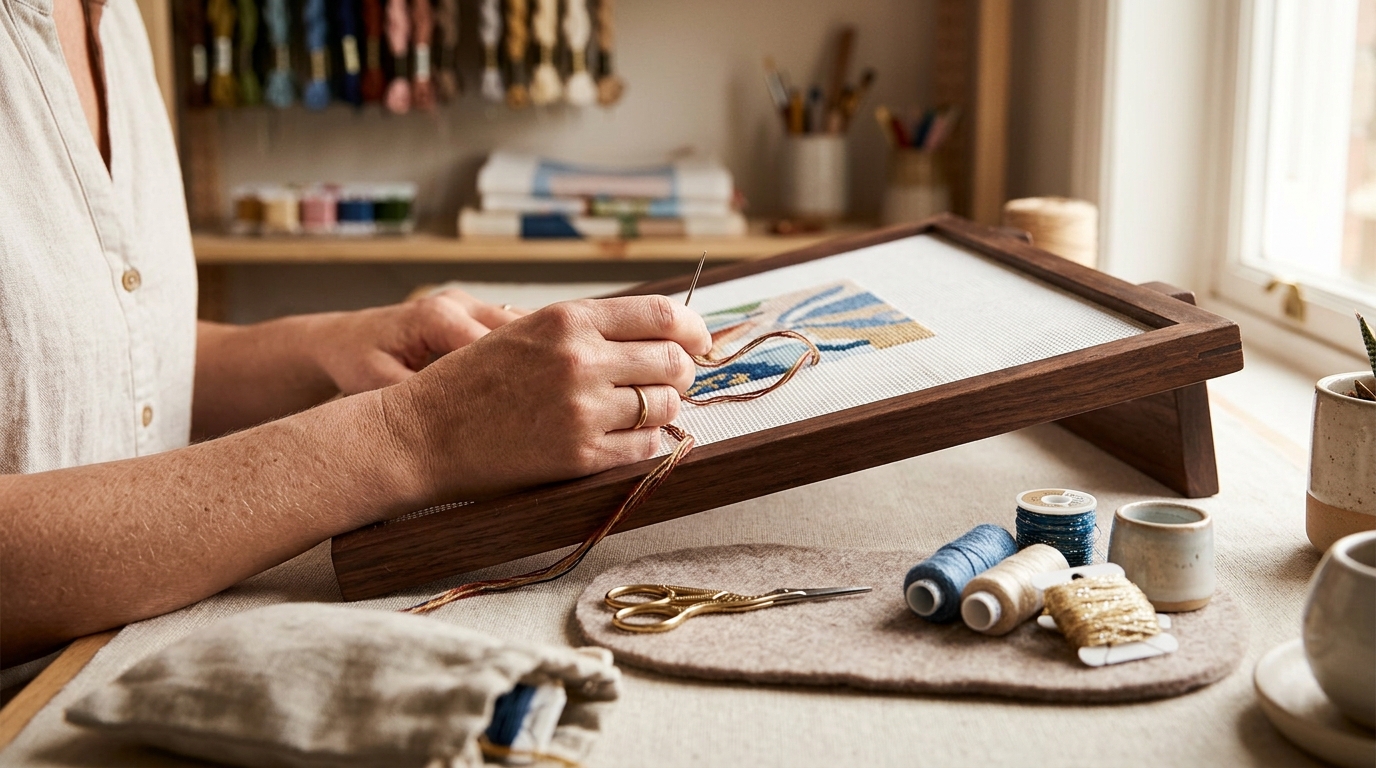
Needlepoint is experiencing a massive resurgence, and whether you just picked up your first canvas or you have a growing stash of hand-painted designs, having the right tools makes all the difference. The good news? You do not need dozens of gadgets to get started. A small, thoughtfully chosen toolkit keeps your stitches even, your threads tangle-free, and your hands comfortable for hours. Below, we break down the eight best needlepoint tools that belong in every project bag, plus tips on how to choose quality over quantity.
1. Tapestry Needles
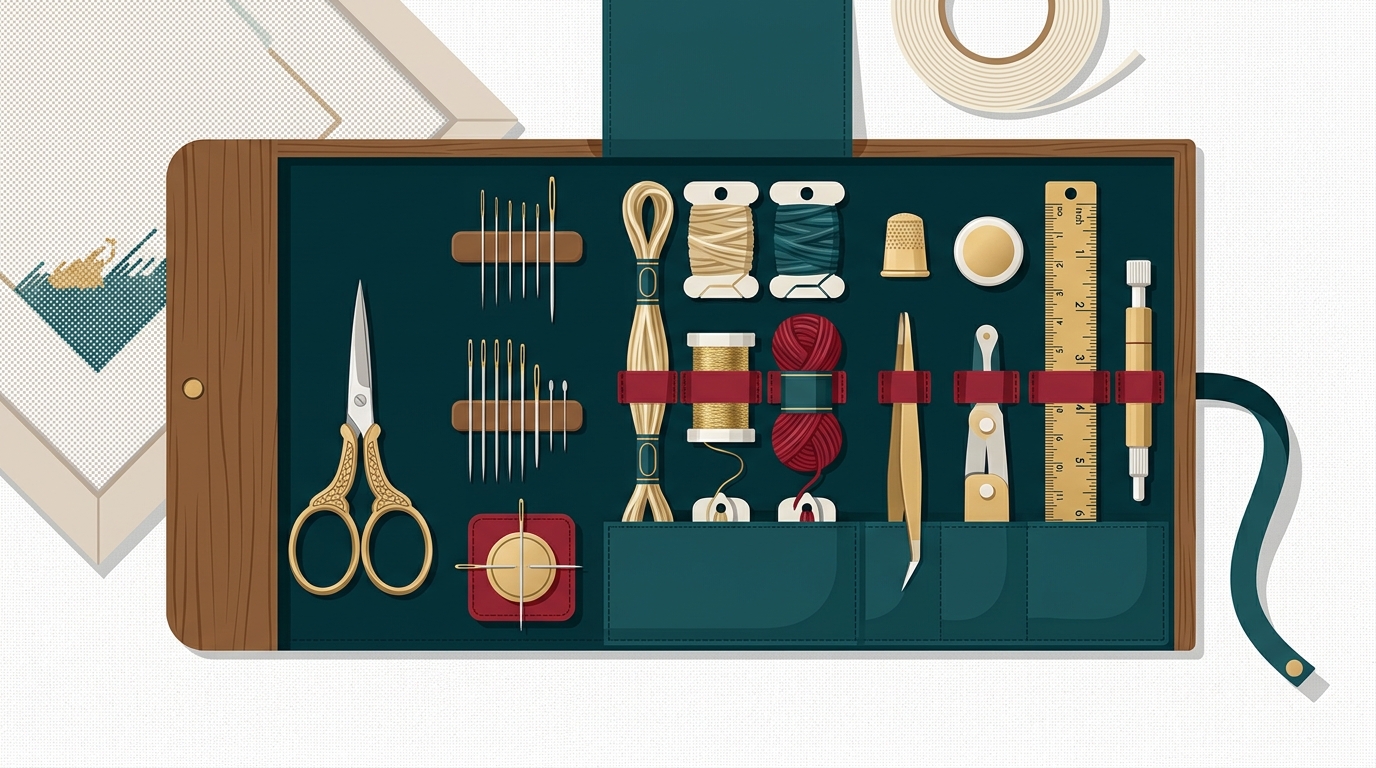
A tapestry needle is a blunt-tipped, large-eyed needle specifically designed to pass through canvas mesh without splitting threads. It is the single most important tool in your kit. Sizes 18 through 24 cover virtually every canvas mesh count you will encounter, from 13-mesh to 18-mesh.
Nickel-plated steel needles resist rust and are affordable, while gold-plated options glide more smoothly through silk and specialty fibers. Keep a few sizes on hand so you can match the needle to the thread weight and fiber type you are using.
2. Embroidery Scissors
A sharp, small pair of embroidery scissors is non-negotiable. You need fine, pointed tips to snip threads cleanly and close to the canvas without nicking nearby stitches. Many stitchers keep two pairs: tiny snips for trimming thread tails and larger dressmaker shears for cutting canvas.
Browse the scissors and threaders collection at The Red Thread Atelier for curated options that are both functional and stylish. Look for a protective sheath so your blades stay sharp inside your project bag.
3. Stretcher Bars and Frames
A needlepoint frame is a device that holds your canvas taut while you stitch. Stretcher bars are the most popular frame style: wooden bars that lock together at right angles, with your canvas tacked along the edges. Using a frame keeps tension consistent, prevents canvas warping, and produces more even stitches overall.
Do You Really Need a Frame?
Not every project requires one. Small ornaments can be stitched in-hand. However, for anything larger than about 8 by 8 inches, a frame dramatically improves stitch quality. If you want hands-free stitching, pair your stretcher bars with a floor or lap stand.
4. Laying Tool
A laying tool is a long, stiletto-shaped instrument used to guide flat or stranded threads so they lie parallel on the canvas. If you work with specialty threads like silk ribbon or metallics, a laying tool is essential for achieving a smooth, professional finish. Simply hold the tool against the thread as you pull it through, stroking the strands into place before tightening the stitch.
5. Needle Minder
A needle minder is a small magnetic accessory that clips onto your canvas to hold your needle when you pause. It sounds simple, but it prevents lost needles, poked fingers, and the frustrating moment when your needle slips between couch cushions. The Red Thread Atelier carries a fun selection of needle minders in modern, eye-catching designs.
6. Thread Conditioner
Thread conditioner is a wax or silicone-based product that coats your fiber to reduce fraying, tangling, and static. It is especially helpful with metallics and overdyed threads that tend to shred after repeated passes through the canvas. A light pass through a conditioner pad before threading your needle saves time and frustration.
7. Needle Threader
Even with a large-eyed tapestry needle, some fibers resist cooperation. A needle threader is a small wire loop tool that guides thread through the needle eye in seconds. It is invaluable when working with thicker wool or multiple strands of cotton floss.
8. Project Bag and Thread Organizer
Keeping your supplies together protects your work and your sanity. A good project bag or stash bag holds your canvas, fibers, scissors, and notions in one portable package. Pair it with a thread organizer, such as plastic cards with labeled slots, to prevent tangling and make color changes faster.
Tool Comparison at a Glance
| Tool | Primary Purpose | Skill Level | Price Range | Must-Have? |
|---|---|---|---|---|
| Tapestry Needles | Stitching through canvas | All levels | $2 - $10 | Yes |
| Embroidery Scissors | Trimming threads cleanly | All levels | $8 - $30 | Yes |
| Stretcher Bars / Frame | Keeping canvas taut | Intermediate+ | $5 - $40 | Recommended |
| Laying Tool | Aligning flat threads | Intermediate+ | $10 - $25 | Recommended |
| Needle Minder | Securing needle when paused | All levels | $8 - $20 | Yes |
| Thread Conditioner | Reducing fraying and tangles | All levels | $5 - $12 | Recommended |
| Needle Threader | Threading thick fibers | Beginner | $2 - $8 | Nice to have |
| Project Bag / Organizer | Portable storage | All levels | $15 - $50 | Recommended |
Key Takeaways
- Start with the basics: tapestry needles, sharp embroidery scissors, and a needle minder cover most beginner needs.
- A stretcher bar frame improves stitch evenness and prevents canvas distortion on medium to large projects.
- Laying tools and thread conditioners become essential once you begin working with specialty fibers like silk or metallics.
- Quality matters more than quantity. A few well-chosen tools outperform a drawer full of cheap gadgets.
- A dedicated project bag keeps everything organized and protects your canvas on the go.
- Match your needle size to your canvas mesh count for the smoothest stitching experience.
- Investing in good scissors early saves time and protects your finished work from frayed edges.
Frequently Asked Questions
What tools do I need to start needlepoint as a beginner?
At a minimum, you need a canvas, thread, tapestry needles, and a pair of small embroidery scissors. A needle minder and a simple project bag round out a solid beginner kit. Check out our beginner-friendly collection for curated starter options.
What size tapestry needle should I use?
The most common pairing is a size 22 needle for 13-mesh canvas and a size 24 needle for 18-mesh canvas. When in doubt, the needle should pass through the mesh holes easily without forcing them open.
Do I really need a frame or stretcher bars?
For small projects like ornaments, stitching in-hand works fine. For larger pieces, a frame keeps tension even and reduces the amount of blocking needed after completion.
What is a laying tool and when should I use one?
A laying tool is a pointed instrument that helps stranded or ribbon threads lie flat and parallel on the canvas. Use it whenever you want smooth, polished coverage, especially with silk or metallic fibers.
How do I keep my threads from tangling?
Cut your working thread to about 18 inches, use a thread conditioner, and store skeins on a thread organizer card. These three habits eliminate most tangling problems.
Are expensive scissors worth it?
You do not need to spend a fortune, but a well-made pair with fine pointed tips will cut more cleanly and last years longer than bargain scissors. Think of them as a long-term investment in stitch quality.
What is a needle minder?
A needle minder is a magnetic tool that attaches to your canvas and securely holds your needle whenever you take a break. It prevents lost needles and accidental pokes.
Where can I buy quality needlepoint tools online?
The Red Thread Atelier offers a curated selection of needlepoint accessories, from scissors and needle minders to stash bags and specialty threads, all available to shop online and in-store in Locust Valley, New York.
Ready to Build Your Perfect Toolkit?
Browse the full accessories collection at The Red Thread Atelier to find every tool on this list, hand-picked for modern stitchers. Whether you are just getting started or upgrading your setup, the right tools turn every project into a pleasure. Visit us online or stop by our Locust Valley shop to see and feel the difference quality makes.