
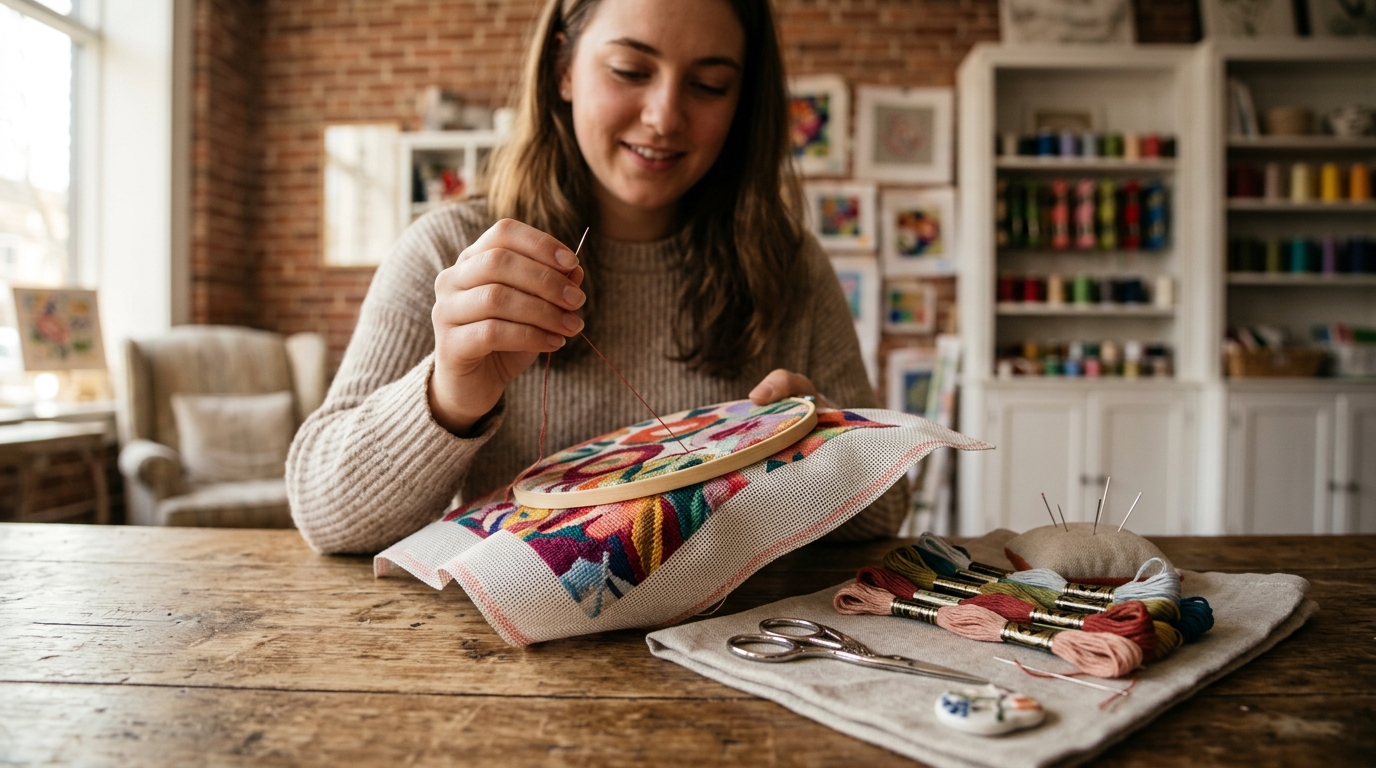
Needlepoint is enjoying a massive revival. With over 8.1 million Americans practicing embroidery and needlepoint and TikTok fueling a wave of younger stitchers, there has never been a better time to pick up a needle. But if you are staring at hundreds of canvases wondering where to start, choosing your first needlepoint kit can feel overwhelming. The right kit removes the guesswork, bundles your supplies, and sets you up for a satisfying first project. This guide walks you through every factor that matters so you can stitch with confidence from day one.
What Is a Needlepoint Kit?
A needlepoint kit is a curated bundle of supplies that includes a canvas, threads, a needle, and instructions packaged together so you can begin stitching without hunting for individual materials. Kits eliminate the confusion of matching thread weight to canvas gauge and ensure you have the right colors from the start.
Modern kits from shops like The Red Thread Atelier's beginner-friendly collection pair contemporary designs with quality materials, making the craft accessible and fun rather than intimidating.
Start With the Right Mesh Count
Mesh count is the number of holes per inch on a needlepoint canvas. It is the single most important spec for a beginner to understand. A lower mesh count means larger holes, thicker thread, and easier visibility.
Best Mesh Range for First-Timers
Most needlepoint educators recommend a 13-mesh canvas for comfort and clarity. Canvases in the 10 to 14 mesh range let you see each stitch clearly without squinting, and the larger holes are forgiving if your tension is uneven.

Mesh Counts to Avoid Early On
An 18-mesh canvas produces beautifully detailed work but demands more precision and patience. Save finer gauges for your second or third project when your hands have built muscle memory.
Why a Pre-Painted Canvas Matters
A pre-painted (or hand-painted) canvas is a canvas with the design already rendered directly on the mesh in full color. Instead of counting threads on a chart, you simply stitch over the printed guide. This is a game-changer for beginners because it removes an entire layer of complexity.
Blank canvases are better suited for advanced or custom needlepoint projects where you want total creative control.
Understanding Thread Types
Thread type affects how your finished piece looks and how easy it is to stitch. Here is a quick breakdown:
Cotton
Cotton thread is soft, affordable, and easy to handle. It glides through canvas smoothly, making it ideal for learning tension and stitch rhythm.
Wool
Wool offers rich texture and excellent coverage on larger mesh canvases. It is slightly less slippery than cotton, which some beginners find easier to control.
Silk and Specialty Fibers
Silk adds a luminous finish, and metallic or novelty threads bring sparkle and dimension. Browse specialty threads and fibers once you are comfortable with basic stitches and want to elevate your work.
Pick a Design and Size You Will Actually Finish
One of the biggest beginner mistakes is choosing a project that is too large or too detailed. A smaller canvas with bold, graphic shapes and limited color changes builds confidence quickly. Look for designs with clear color blocks rather than intricate shading.
Think about how you will use the finished piece. Ornaments, coasters, and small wall hangings are fast wins. If you love pop culture needlepoint canvases, a fun design you are excited about will keep you motivated to finish.
Setting a Realistic Budget
Needlepoint kits range widely in price depending on canvas size, thread quality, and designer. A small beginner kit might start around $40 to $75, while larger or hand-painted designer canvases with premium fibers can exceed $200. Spending a bit more on quality materials often means a smoother stitching experience and a finished piece you are proud to display or have professionally finished.
The Red Thread Atelier also offers self-finish products that help you turn completed canvases into polished items without a separate finisher.
Beginner Kit Feature Comparison
| Feature | Ideal for Beginners | Better for Intermediate+ |
|---|---|---|
| Mesh Count | 10 to 14 mesh | 18 mesh and above |
| Canvas Type | Pre-painted / printed | Blank or charted |
| Thread | Cotton or wool | Silk, metallics, blends |
| Design Complexity | Bold shapes, few colors | Intricate shading, many colors |
| Project Size | Under 6 x 6 inches | 10+ inches or shaped |
| Estimated Time | 6 to 12 hours | 20+ hours |
| Price Range | $40 to $100 | $100 to $300+ |
Key Takeaways
- Choose a 13-mesh canvas for your first project; the larger holes make stitching easier to see and more forgiving.
- A pre-painted canvas removes the need to count threads, so you can focus on learning your stitches.
- Cotton and wool threads are the most beginner-friendly fiber choices.
- Start with a small, bold design (under 6 x 6 inches) to build confidence and finish faster.
- Kits bundle everything you need, eliminating the stress of sourcing materials separately.
- Set a budget between $40 and $100 for a quality first kit that will not frustrate you.
- Visit a local needlepoint shop for hands-on guidance; staff members are usually avid stitchers themselves.
Frequently Asked Questions
What should a beginner needlepoint kit include?
A good beginner kit includes a pre-painted canvas, pre-sorted threads, a tapestry needle, and step-by-step instructions. Some kits also include a needle threader and scissors.
What mesh count is best for beginners?
A 13-mesh canvas is widely considered the sweet spot. It offers a balance between detail and ease of stitching, with holes large enough to see clearly.
Is needlepoint hard to learn?
No. Needlepoint is a relatively easy craft to pick up. The basic tent stitch and basketweave stitch are repetitive motions that feel almost therapeutic once you get going.
How long does a beginner needlepoint project take?
Most small beginner projects take 6 to 12 hours of stitching time. You do not need to finish in one sitting; many stitchers work in short sessions over days or weeks.
What is the tent stitch?
The tent stitch is the most common and beginner-friendly needlepoint stitch. It is a simple diagonal stitch that covers one canvas intersection at a time and forms the foundation of most needlepoint work.
Do I need a frame or stretcher bars?
Frames and stretcher bars help keep your canvas taut and your stitches even, but they are not required for smaller projects. Many beginners stitch comfortably in-hand on canvases under 8 inches.
Can I get my finished piece professionally finished?
Yes. Many needlepoint shops offer finishing services to turn your stitched canvas into a pillow, ornament, or framed piece. Check out The Red Thread Atelier's finishing FAQ for details on turnaround times and options.
Where can I find modern beginner needlepoint kits?
Look for shops that curate contemporary designs specifically for new stitchers. The Red Thread Atelier's full collection features beginner-friendly and exclusive designs available online and at their Locust Valley, NY location.
Ready to Start Stitching?
Choosing your first needlepoint kit does not have to be complicated. Focus on a 13-mesh pre-painted canvas, pick a design that excites you, and let a quality kit handle the rest. If you want personalized guidance, visit The Red Thread Atelier in Locust Valley, New York, or shop online. The team can walk you through your first project in about 10 minutes and help you find the perfect beginner canvas. Happy stitching!