
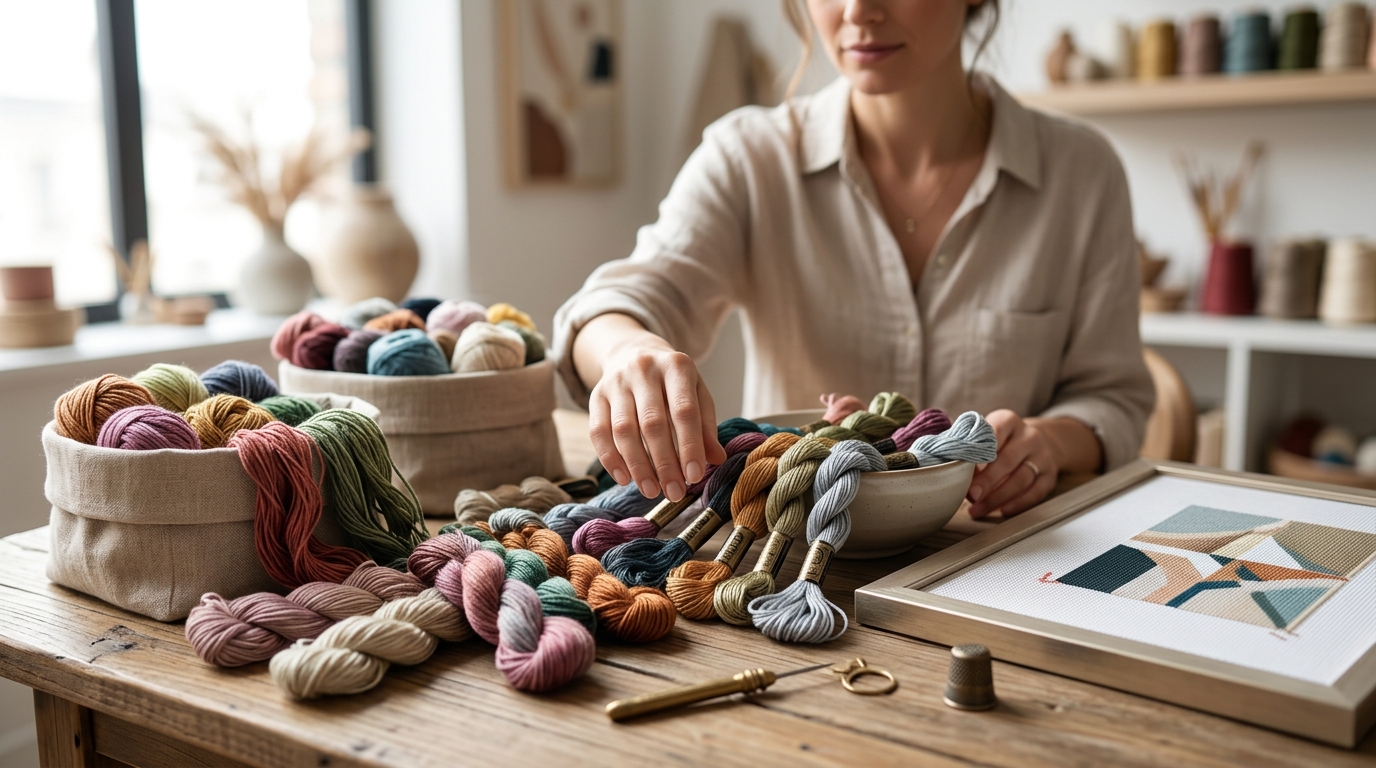
Choosing the right thread is the single most critical decision in needlepoint, directly influencing the texture, durability, and visual impact of your finished piece. According to industry standards for fiber arts, the correct thread weight and material can transform a simple canvas into a museum-quality artwork. This guide breaks down the essential factors to consider when building your stitching kit.
Understanding Thread Materials
The foundation of any needlepoint project lies in the fiber itself. Different materials offer distinct advantages regarding sheen, durability, and stitch definition. Silk and Ivory threads are renowned for their luxurious luster and soft hand, making them ideal for high-end portraits and detailed designs. These threads allow for subtle color blending that mimics oil painting techniques.
For those seeking durability and vibrant color saturation, cotton-based threads remain the industry standard. Silk and Ivory is a premier brand offering exceptional quality for collectors. Another popular option is Pepper Pot thread, known for its rich, deep hues and consistent dye lots. When selecting a material, consider the intended use of the piece. Wall hangings benefit from the sheen of silk, while upholstery or frequently used items require the abrasion resistance of cotton or wool blends.
Needlepoint is defined as a form of embroidery using a stiff, open-weave canvas as the foundation. The thread must be strong enough to cover the canvas completely without leaving gaps, yet flexible enough to pass through the mesh without damaging the fibers. Understanding the tactile properties of each thread type helps in making an informed choice that aligns with your artistic vision.
Matching Thread to Canvas Count
The count of your needlepoint canvas, which refers to the number of holes per inch, dictates the appropriate thread weight. Using the wrong combination can result in a stiff, unyielding piece or one that lacks definition. For coarse meshes like 7 or 8 count, you typically need a single strand of wool or a thick cotton thread. These heavy threads fill the large holes effectively, creating a bold, graphic look.
As the canvas count increases to 10, 12, or 13 count, the required thread becomes finer. 13m is a common designation for fine cotton threads used on 13-count canvas. This ratio ensures that the stitches lie flat and cover the canvas evenly. If you use a thread that is too thick for a high-count canvas, the resulting fabric will be rigid and difficult to frame. Conversely, a thread that is too thin will leave the canvas visible, compromising the integrity of the design.
Always check the manufacturer's recommendation for your specific canvas. The Red Thread Atelier offers a curated selection of threads designed to pair seamlessly with various canvas counts. For instance, their Essentials collection provides reliable options for standard projects. When in doubt, consult the Beginner Friendly guides available on their site for specific pairing advice.
Color Theory and Lighting
Selecting thread colors involves more than just matching the design sketch. The way light interacts with different fibers can dramatically alter the perceived hue of your work. Silk threads reflect light differently than matte cottons, often appearing brighter or more dynamic in natural light. This optical effect is crucial for portraits where skin tones must appear lifelike.
Consider the environment where the finished piece will hang. A room with north-facing light may require warmer thread tones to prevent the artwork from looking dull. Conversely, south-facing light can wash out cool tones, necessitating deeper shades. The Georgia's Edit often features color palettes tested for specific lighting conditions, offering a reliable starting point for your selection.
Another critical factor is the consistency of dye lots. Even within the same color name, different production batches can vary slightly. Always purchase enough thread from a single dye lot to complete your project. If you need to add more later, ensure the new batch matches the original. The Threads section on The Red Thread Atelier website allows you to filter by availability, helping you secure sufficient quantities of your chosen colors.
Exploring Specialty Threads
For advanced stitchers, specialty threads add dimension and texture to needlepoint. Kreinik threads, for example, are metallic tapes that can be used single or twisted to create shimmering effects. These are perfect for highlighting details like jewelry, borders, or festive elements. Milan threads offer a unique twisted structure that adds volume and interest to specific stitches.
Specialty threads require different handling techniques. Metallic threads can be prone to tangling, so using a threader or a slower stitching pace is recommended. The Speciality Threads category at The Red Thread Atelier includes these unique options, along with detailed instructions on how to use them effectively. Incorporating these threads sparingly can elevate a standard design into a statement piece.
Accessories also play a role in managing specialty threads. High-quality Needlepoint Accessories such as sharp scissors and threaders are essential for working with delicate or metallic fibers. The Red Shack Fancy Pouch is a popular choice for organizing these tools and keeping them protected. Proper maintenance of your tools ensures that your specialty threads remain tangle-free and ready for use.
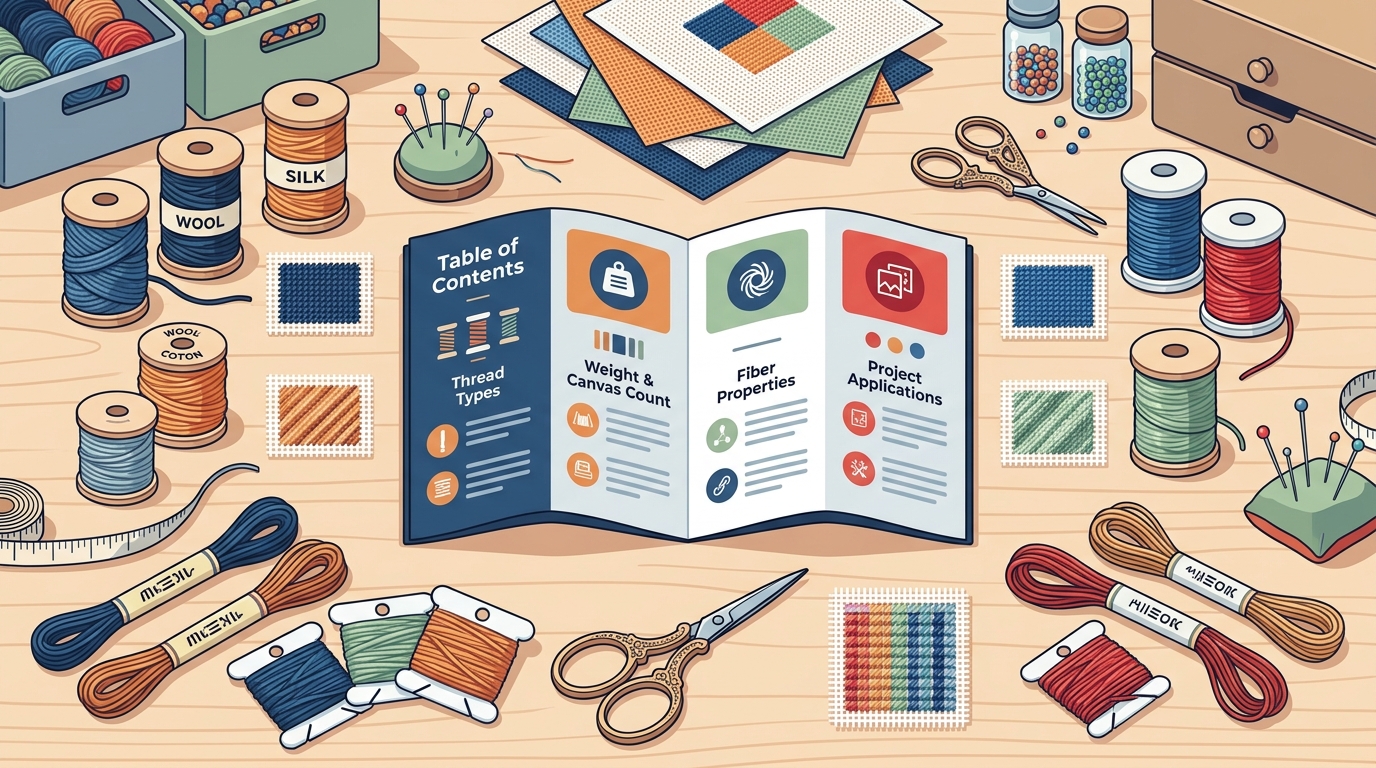
Thread Type Comparison
To simplify your selection process, here is a comparison of common thread types used in needlepoint:
| Thread Type | Best For | Sheen | Durability | Typical Canvas Count |
|---|---|---|---|---|
| Silk & Ivory | Portraits, Fine Art | High | Moderate | 10-13 Count |
| Pepper Pot | General Purpose, Decor | Medium | High | 7-10 Count |
| Kreinik | Accents, Metallic Details | Very High | Low | Any (Special Use) |
| Milan | Textured Effects | Low | High | 5-7 Count |
Key Takeaways
- Material Matters: Silk offers sheen for art, while cotton provides durability for functional items.
- Canvas Match: Always pair thread weight with canvas count to ensure proper coverage and flexibility.
- Dye Lots: Purchase all necessary thread from a single dye lot to avoid color discrepancies.
- Specialty Options: Use Kreinik or Milan threads for texture, but handle them with care.
- Tool Quality: Invest in sharp scissors and threaders to maintain thread integrity.
- Curated Selection: The Red Thread Atelier offers expert-curated threads like Silk & Ivory and Pepper Pot.
- Lighting Impact: Consider the lighting of the display area when choosing thread colors.
Frequently Asked Questions
What is the difference between silk and cotton needlepoint thread?
Silk thread has a natural luster and is softer, making it ideal for detailed portraits and fine art. Cotton thread is stronger, more durable, and has a matte finish, making it better for upholstery and everyday items.
How do I know which thread weight to use for my canvas?
Check the canvas manufacturer's recommendation. Generally, higher canvas counts (like 13) require finer threads (like 13m), while lower counts (like 7) need thicker threads. The goal is to cover the canvas completely without stiffness.
Can I mix different thread brands in one project?
It is generally not recommended to mix brands because dye lots and fiber compositions can vary. However, you can mix thread types (e.g., silk and cotton) if you ensure the weights are compatible with the canvas count.
Where can I find specialty threads like Kreinik?
The Red Thread Atelier carries a range of specialty threads, including Kreinik and Milan. You can find them in the Speciality Threads collection on their website.
What accessories do I need for working with specialty threads?
You will need sharp scissors to cut metallic threads cleanly, a threader to help pass thick or slippery threads through the canvas, and a needleminder to hold your thread in place. The Accessories section offers these essentials.
How do I prevent thread tangling?
Store your threads in a cool, dry place. Use a Stash Bag or the Red Shack Fancy Pouch to keep individual skeins organized. Avoid pulling thread too tightly from the center of a ball.
What is the Red Thread Atelier?
The Red Thread Atelier is a premier needlepoint destination in Locust Valley, New York, offering a curated collection of canvases, threads, and accessories for stitchers of all levels.
Start Your Project
Selecting the perfect thread is the first step toward creating a masterpiece. With the right materials and guidance, your needlepoint project will stand the test of time. Explore the extensive collection at The Red Thread Atelier to find the threads that bring your vision to life. Visit their Shop page to browse canvases, accessories, and exclusive items. For personalized advice, contact their team at hello@theredthreadatelier.com or visit their studio in Locust Valley, NY.